
When Ignorance Becomes Talkative,
Opinions Start Playing a Key Role in Life

* At all times, an honest questioning has stimulating effects. One day a couple of friends discussed on Facebook a sentence in the article “The Challenge of Learning”.
* “Opinions cannot replace knowledge”, says the sentence [1] - to which a reader commented: “But this is only your opinion.”
* And we explained:
* “The sentence is not meant to be a weapon against anyone. It states a simple fact: it is up to each pilgrim to examine in practical terms what the actual difference is, in his own life, between knowledge and opinion.”
* In theosophy, each student must be his own master. He has to “take up his cross” and walk along the Path, as recommended in Matthew (16:24). In other words, the learner must assume responsibility for his own Karma and follow the Wisdom taught by the immortal sages.
* Another reader wrote on the same sentence:
* “Opinions cannot replace knowledge, no doubt. But what about opinions based on intuition?”
* We then said:
* “The idea of the sentence is not to solve all problems at once, nor deny the complexity of life. The sentence but indicates the fact that there is a difference between believing something and having direct knowledge. All the rest remains unsolved. One sentence is always a limited assertion, even if it is valuable. Progress is made step by step. Besides, what exactly is intuition? True knowledge of intuition may require an enduring process involving meditation, study and self-examination. Even when there is a direct knowledge about intuition, it is not easy to express it in so many words.”
* Lots of people have opinions regarding intuition. A smaller number of individuals have a direct and accurate knowledge of it - but they find it difficult to demonstrate it for non-intuitive people to see.”
* Ignorance is often talkative, while knowledge lives in harmony with silence.
* Propaganda campaigns promote the opposite of truth. Theosophy is not about imposing ideas on others. It aims instead at stimulating self-knowledge, self-respect, self-control, patience - and a love for truth.
Learning to Learn:
A Lesson to the West
* Truth-seekers do not aim at replacing any of the existing religions or philosophies.
If they have a universal view of things, they study and try to live up to the common essential wisdom present in the main religions, philosophies, sciences, and arts.
* Yet everything is dynamic. As the richest part of the West has to deal with an accumulated Karma of materialistic ignorance, the friends of wisdom must make sure they have enough detachment regarding the various forms of decay that surround them. After dominating the world for a 500-year cycle, the West has been quick to destroy itself from a moral, religious, cultural, and even demographic-migratory point of view.
* On the other hand, citizens from every nation can get spiritual renewal and unlimited inspiration from non-Western civilizations and their philosophies, and from various spiritual traditions usually suppressed by colonial and neocolonial practices.
* The wisdom from the ancient West is also inspiring. For many centuries the West had true spiritual impulses. Self-destruction has accelerated, it seems, since the industrial revolution. Pythagoreanism and Platonism are tantamount to theosophy. The two philosophies are present in the essence of Christianity. They are available even now. The same can be said of the Jewish wisdom, one of the main sources of Christianity, which has much in common with theosophy.
* Medieval philosophers transmit to us - to a large extent - the sacred message coming from the ancient Western wisdom. Andean philosophy talks to us, along with the African philosophy. The Russian wisdom and the ancient sages of Asia can be heard by us. In all such instances, however, one must go beyond appearance - and transcend dead letter.
* There is no reason to despair. In human evolution, often the deepest failures are the sources of the best lessons. Every “end of times” paves the way to a new bright epoch. Western societies can always start again from the essentials, leaving aside their established forms of egotistical pride and ignorance.
* Each individual will help the birth of the new age by listening to the silent voice of his own conscience.
* Many Western nations will be blessed if they learn to learn from the lands and continents they have systematic despised for the last 500 years. There is much to unveil in the neglected spiritual traditions of indigenous peoples around the world, including Asian nations.
* Truth will liberate the West.
* By humbly correcting their mistakes and seeking eternal wisdom, our societies may correctly rebuild themselves. And this seems to be the next phase in human history. It is the step to take, now that old cycles end and new and better times get gradually inaugurated.
The Science of the Soul:
How to Develop Willpower
* Portuguese physician and educator João Serras e Silva wrote in the early 1940s:
* “The way to develop willpower is clear; everyone can try to develop this precious faculty any time. An abstention from speaking, or from being silent; the containment of the tendency to follow curiosity, vanity, gluttony, a thousand things, is enough to fortify the will. As there is a gymnastics to strengthen weak muscles, there is also a gymnastics to tone up an anemic will. In both cases experts have invented appropriate techniques.” [2]
NOTES:
[1] See “The Challenge of Learning”.
[2] Translated from the article “Como Educar a Vontade”. Portuguese thinker João Serras e Silva was born in 1868 and lived up to 1956.
000
The article “Thoughts Along the Road - 97” was published on the websites of the Independent Lodge of Theosophists on 14 June 2026. An initial version of it is part of the August 2023 edition of “The Aquarian Theosophist”, pp. 15-17.
000
Visit the channel of The Aquarian Theosophist on YouTube:
000
Read more:
000
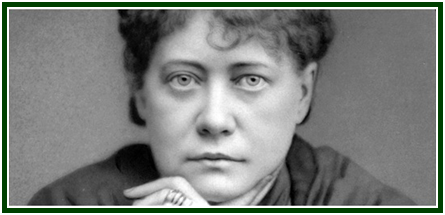
Helena Blavatsky (photo) wrote these words: “Deserve, then desire”.
000

